
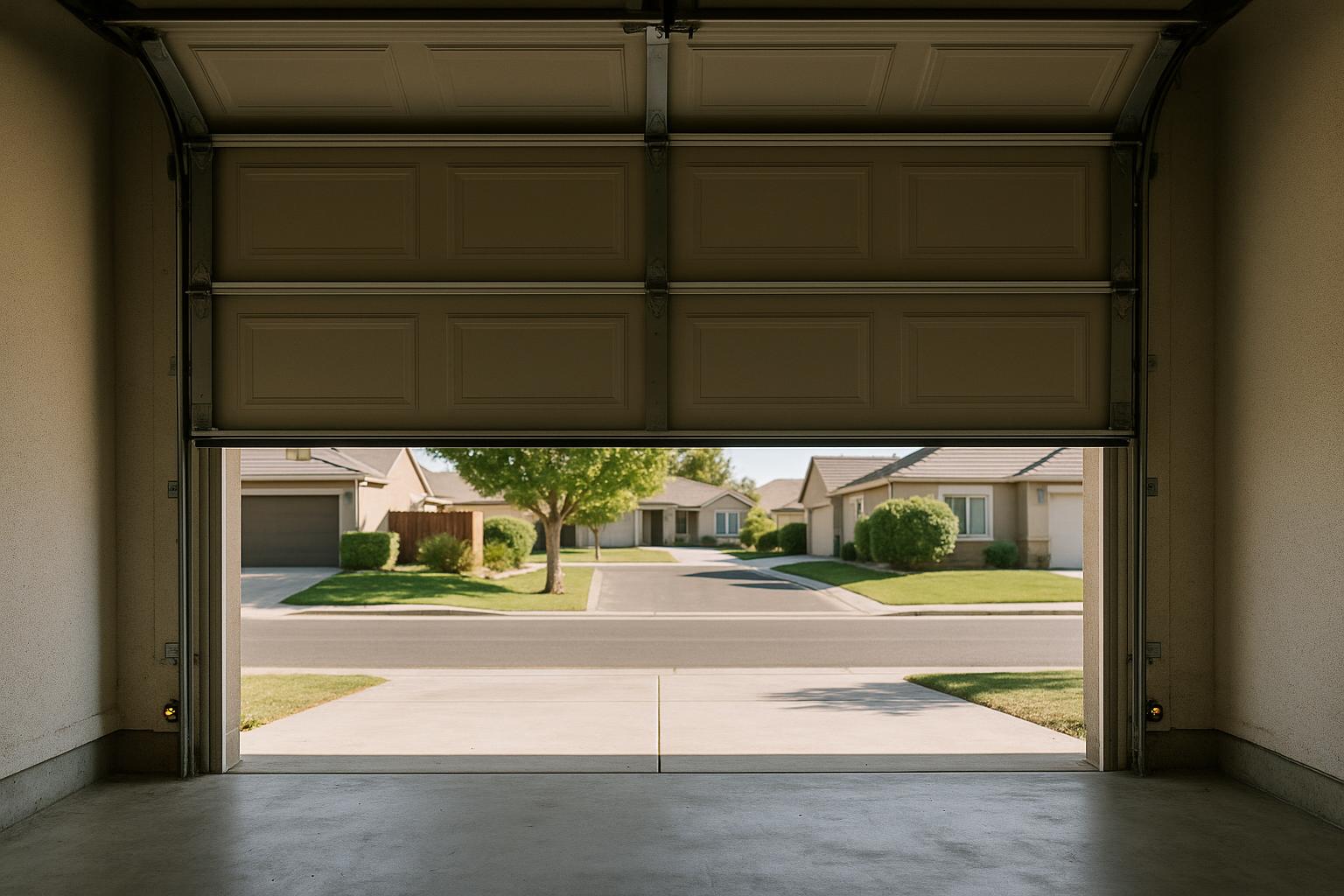
That Frustrating Moment When Your Garage Door Won't Stay Closed
You press the button on your remote, watch your garage door start its descent, and then — just before it reaches the floor — it reverses and goes right back up. You try again. Same thing. Maybe you try holding the wall button down, and it still won't cooperate.
This is one of the most common garage door problems homeowners in Oakdale deal with, and it's more than just an annoyance. A garage door that won't fully close leaves your home vulnerable to weather, pests, and security risks. The good news is that the cause is usually identifiable and fixable. Let's walk through the most likely reasons your garage door keeps reversing and what you can do about each one.
Understanding Your Garage Door's Safety System
Before diving into specific causes, it helps to understand why your garage door is designed to reverse in the first place. Federal law has required all automatic garage door openers manufactured after 1993 to include two safety mechanisms:
- Photo-eye sensors: These are the small sensors mounted near the bottom of your garage door tracks on either side. They project an invisible beam across the door opening. If anything breaks that beam while the door is closing, the door reverses.
- Auto-reverse mechanism: If the door encounters physical resistance while closing — like hitting an object or the floor with too much force — it's designed to reverse direction.
Both of these features exist to prevent injuries and property damage. But when something goes wrong with either system, your door can reverse even when there's nothing actually in the way.
Cause #1: Misaligned Photo-Eye Sensors
This is the number one reason garage doors reverse prematurely, and it's the first thing we check on service calls throughout Oakdale and surrounding areas like Riverbank and Escalon. The photo-eye sensors need to be precisely aligned with each other to maintain their infrared beam. If one sensor gets bumped, shifted, or tilted even slightly, the system thinks something is blocking the door.
How to Check
Look at the small LED lights on each sensor. Typically, one sensor has a green light and the other has an amber or red light. If either light is blinking or off, the sensors are likely misaligned. You can try gently adjusting the sensor brackets by hand until both lights are solid. Also check for dirt, cobwebs, or debris on the sensor lenses — a quick wipe with a soft cloth sometimes solves the problem entirely.
Cause #2: The Close-Limit Switch Needs Adjustment
Your garage door opener has limit settings that tell it how far the door should travel in both the open and close directions. If the close-limit is set incorrectly, the opener may think the door has hit an obstruction when it's actually just reaching the floor. The opener interprets that resistance as a safety issue and reverses.
How to Fix It
Most garage door openers have limit adjustment screws or dials on the motor unit. Consult your owner's manual for the exact location and instructions. Small adjustments — usually a quarter turn at a time — can make a big difference. If you're not comfortable making this adjustment yourself, it's a quick fix for a professional technician.
Cause #3: Worn or Broken Springs
Your garage door springs do the heavy lifting, literally. They counterbalance the weight of the door so the opener doesn't have to work as hard. When springs wear out or break, the door becomes significantly heavier. The opener struggles to control the door's descent, and the auto-reverse mechanism may kick in because the system detects abnormal resistance.
If you notice your door seems sluggish, makes loud banging noises, or if you can see a visible gap in one of the torsion springs above the door, spring replacement is likely needed. This is not a DIY job — garage door springs are under extreme tension and can cause serious injury. Homeowners in Oakdale and Modesto should always call a professional for spring work.
Cause #4: Track Problems
Bent, misaligned, or obstructed tracks can cause the door to bind or stick as it closes. When the opener encounters this resistance, it reverses. Inspect the vertical and curved portions of your tracks for visible dents, gaps between the track and the rollers, or any objects that may have fallen into the track path.
Signs of Track Issues
- The door appears crooked or uneven as it moves
- You hear scraping or grinding sounds
- The door hesitates or jerks at certain points during travel
- Visible bends or dents in the metal track
Minor track adjustments can sometimes be made by loosening the mounting brackets and gently tapping the track back into position. However, severely damaged tracks should be replaced by a professional to ensure safe operation.
Cause #5: Worn Rollers or Hinges
Over time, the rollers that guide your door along the tracks can wear out, crack, or seize up. Similarly, hinges can become stiff or corroded. Both issues create friction and resistance that the opener may interpret as an obstruction. If your door sounds noisy or doesn't glide smoothly, worn hardware could be the culprit.
Replacing rollers — especially upgrading from plastic to nylon rollers — can dramatically improve your door's operation and reduce noise. This is a common maintenance item we handle for homeowners across Oakdale, Manteca, and Ripon.
Cause #6: Wiring Issues
Less common but still worth mentioning: damaged or frayed wiring between the opener and the sensors can cause intermittent reversing problems. Rodents, lawn equipment, and general wear can damage the low-voltage wires that run along the ceiling and down to the sensors. If you've checked everything else and the problem persists, a wiring issue may be to blame.
When to Call a Professional
Some of these fixes — cleaning sensors, checking for obstructions, and minor limit adjustments — are well within the ability of most homeowners. But other issues require professional tools, expertise, and safety precautions. You should call a garage door technician when:
- You suspect broken or worn springs
- The tracks are visibly damaged or the door is off-track
- You've tried basic troubleshooting and the problem persists
- The opener itself seems to be malfunctioning
- You're unsure about any adjustment and don't want to risk making things worse
At Oakdale Garage Door Solutions, we diagnose reversing issues quickly and get your door working properly — usually in a single visit. We serve homeowners and businesses throughout Oakdale and neighboring communities, and we always explain what we find before starting any work.
Prevention: Keep Your Door Running Smoothly
Regular maintenance goes a long way toward preventing unexpected problems. Here are a few things you can do throughout the year:
- Test the safety sensors monthly by placing an object in the door's path and pressing close. The door should reverse immediately.
- Lubricate moving parts — rollers, hinges, springs, and tracks — with a garage door-specific lubricant every six months.
- Visually inspect springs, cables, rollers, and tracks for signs of wear each season.
- Schedule professional maintenance annually to catch small issues before they become costly repairs.
A garage door that reverses before closing is trying to tell you something. Listen to it, troubleshoot the basics, and don't hesitate to call in a professional when you need one. Your garage door is the largest moving part of your home — it deserves proper attention.