
Your Garage Door Springs Are Trying to Tell You Something
If you've ever had a garage door spring snap, you know it's not subtle. The loud bang, the door that suddenly won't open, the scramble to figure out what just happened — it's one of those household emergencies that catches people completely off guard. But here's the thing: garage door springs almost always show warning signs before they fail.
For homeowners in Oakdale and the surrounding Central Valley communities, understanding these warning signs can save you from being stuck with a non-functional garage door on a busy morning. More importantly, it can keep you and your family safe. A broken spring under tension is genuinely dangerous, and catching the problem early is always the smarter move.
What Do Garage Door Springs Actually Do?
Before we talk about what goes wrong, it helps to understand what your springs are doing in the first place. Your garage door is heavy — most residential doors weigh between 130 and 350 pounds. The springs are what counterbalance all that weight, making it possible for your opener (or your arms) to lift the door with minimal effort.
There are two main types of garage door springs:
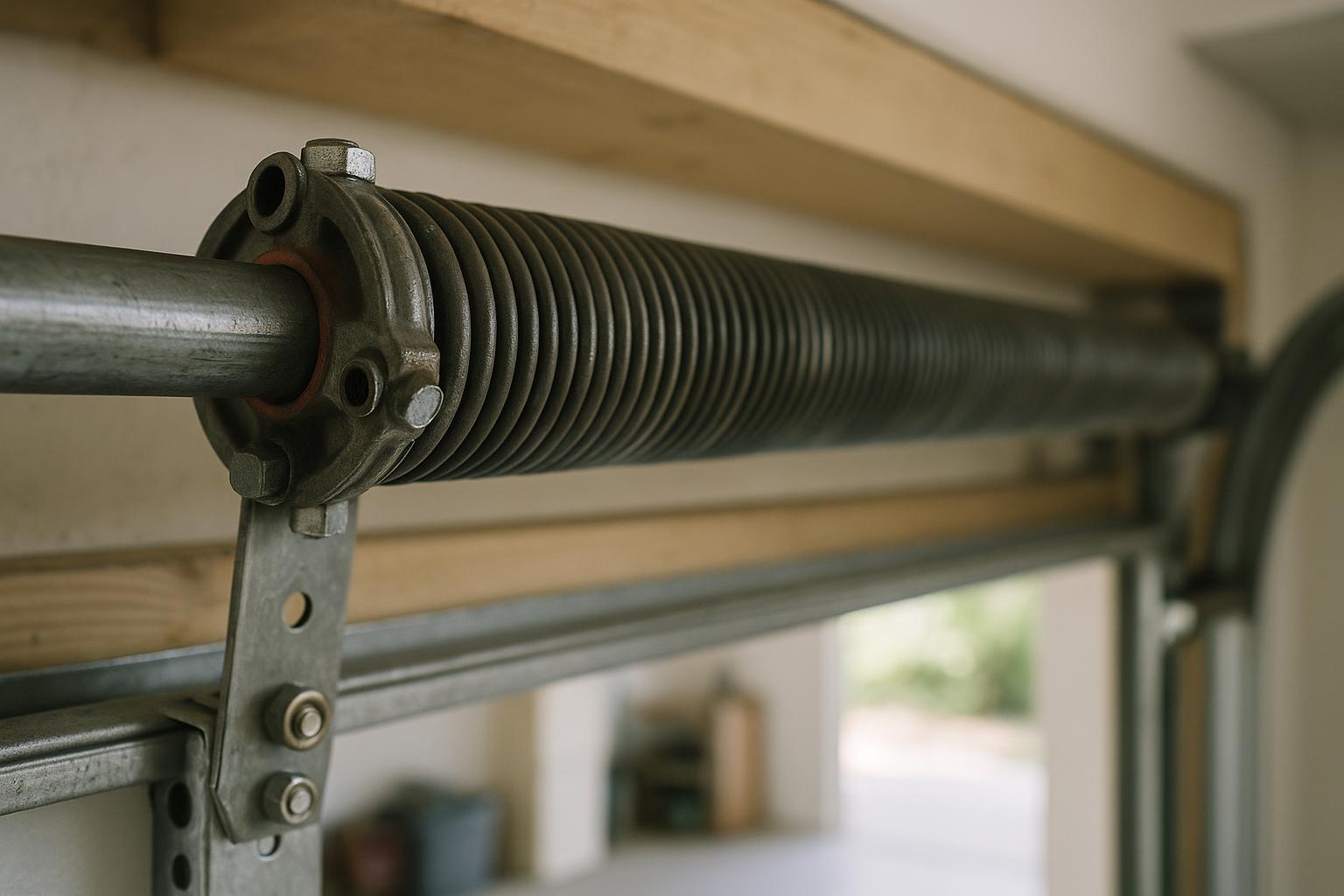
- Torsion springs — mounted on a metal shaft above the door opening. These are the most common type in modern garage doors and use torque to lift the door.
- Extension springs — mounted on either side of the door, running parallel to the horizontal tracks. These stretch and contract to assist with lifting.
Both types are under enormous tension, which is why spring replacement is one of those jobs that should always be handled by a professional. But knowing when to call for help starts with recognizing the signs of wear.
7 Warning Signs Your Garage Door Springs Are Failing
1. The Door Feels Heavier Than Usual
Try this simple test: disconnect your garage door opener by pulling the emergency release cord, then manually lift the door about halfway. A properly balanced door should stay in place on its own. If it feels noticeably heavy or slides back down, your springs are losing tension and struggling to support the door's weight.
2. The Door Opens Unevenly or Crooked
If one side of your garage door rises faster than the other, it could mean one of your springs is weaker than its counterpart. This is especially common with extension spring systems where each side operates somewhat independently. An uneven door puts extra stress on your tracks, rollers, and opener, creating a chain reaction of problems.
3. You Hear Squeaking or Grinding Noises
Some noise during operation is normal, but new or worsening squeaking, grinding, or popping sounds often point to springs that are corroding, losing lubrication, or developing stress fractures. If your garage door has started sounding different lately, don't ignore it.
4. Visible Gaps in the Spring Coils
This one is easy to spot if you know where to look. A healthy torsion spring has tightly wound coils with no visible gaps between them. If you see a separation or gap in the coils — even a small one — the spring has already partially failed. This is a sign that a complete break is imminent, and you should call for service right away.
5. The Door Slams Shut Quickly
When springs are functioning properly, they control the speed at which your door closes. If your door has started dropping faster than usual or closing with a noticeable thud, the springs aren't providing enough resistance. This is both a functional problem and a safety hazard, especially if you have kids or pets around the garage.
6. Your Opener Is Straining
Your garage door opener is designed to do a relatively small portion of the lifting work — the springs handle most of it. If your opener sounds like it's working harder than usual, running louder, or occasionally failing to open the door completely, worn springs may be forcing it to pick up the slack. This can burn out your opener motor prematurely, turning one repair into two.
7. The Springs Are Visibly Rusted
Rust is a spring killer. It increases friction between the coils, weakens the metal, and accelerates wear. Here in Oakdale, our hot summers followed by cool, damp mornings can create conditions that promote rust on unprotected metal components. If your springs look orange or corroded, they're living on borrowed time.
How Long Do Garage Door Springs Last?
Most standard garage door springs are rated for approximately 10,000 cycles, with one cycle being a single open-and-close operation. If you use your garage door four times a day, that works out to roughly seven years. Higher-quality springs rated for 20,000 or even 25,000 cycles are available and worth the investment if you want longer intervals between replacements.
Factors that shorten spring life include:
- Lack of regular lubrication and maintenance
- Rust and corrosion from moisture exposure
- Extreme temperature fluctuations
- A door that's heavier than the springs were rated for
What to Do If You Notice These Signs
If any of the warning signs above sound familiar, here's what we recommend:
- Stop using the door if it's clearly struggling. Continuing to operate a door with failing springs puts stress on every other component and increases the risk of a sudden break.
- Don't attempt a DIY spring replacement. We can't stress this enough. Garage door springs are under extreme tension, and improper handling can cause serious injury. This is a job for trained technicians with the right tools.
- Schedule an inspection. A professional can assess the condition of your springs, determine how much life they have left, and replace them before they fail completely.
At Oakdale Garage Door Solutions, we see spring-related calls every week. Many of them could have been caught earlier with a simple inspection. We serve homeowners throughout Oakdale, Riverbank, Escalon, Modesto, Manteca, and Ripon, and we're happy to come out and take a look if something doesn't seem right with your door.
Prevention Goes a Long Way
The best way to avoid a surprise spring failure is routine maintenance. Having your springs inspected, lubricated, and adjusted once or twice a year can significantly extend their lifespan. During a maintenance visit, a technician will also check your cables, rollers, tracks, and opener — catching small issues before they become expensive repairs.
If it's been a while since anyone has looked at your garage door system, or if you've noticed any of the signs we've covered here, give us a call. We'll make sure your springs — and the rest of your door — are in good shape so you can get back to your day without worrying about what's happening overhead.